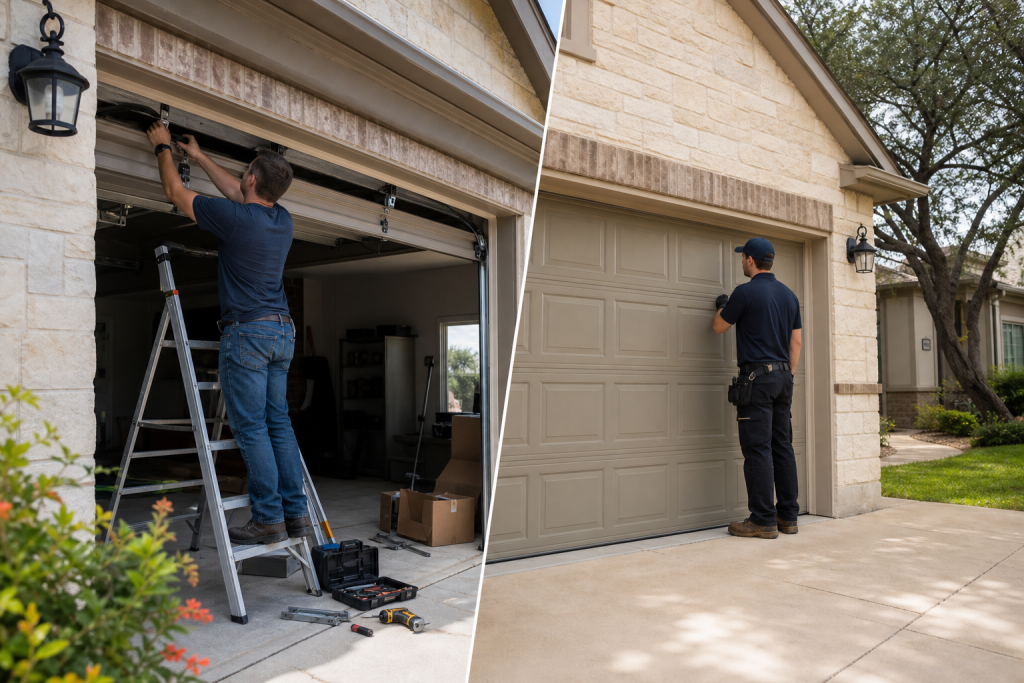
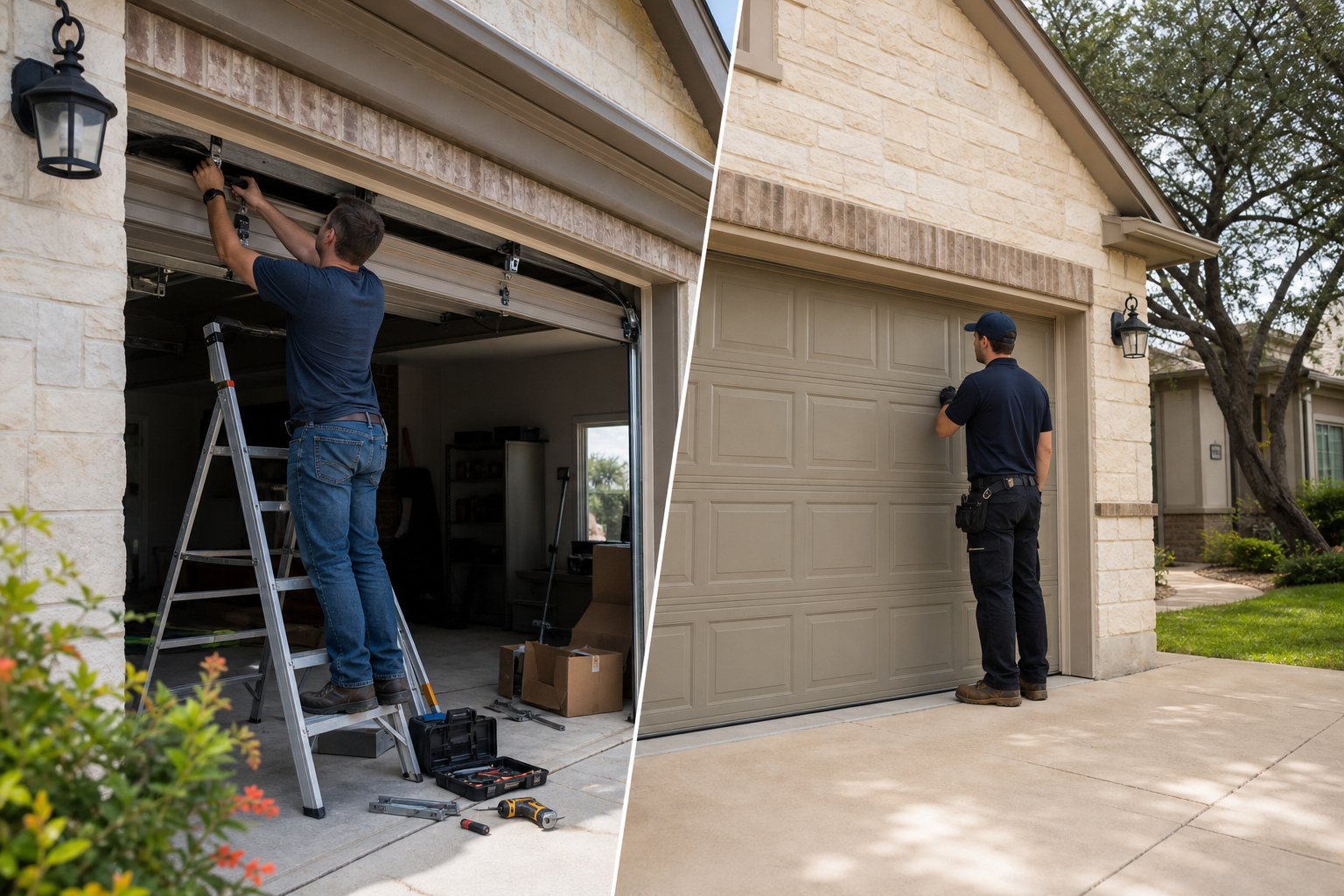
Top Signs You Need Garage Door Service — Don’t Ignore These
A garage door that takes three seconds longer to open than it did six months ago isn’t ‘just getting old’ — it’s telling you the spring tension is off, and when that spring goes, it goes all at once, usually at the worst possible time. Ignoring common garage door issues in San Antonio, like unusual noises or slow operation, can quickly turn minor inconveniences into expensive emergencies. We’ve seen firsthand how small problems escalate when homeowners delay service, so understanding these top warning signs can save you time, money, and a lot of frustration.
Listen Closely: The Sounds Your Garage Door is Trying to Tell You
Your garage door is a complex system with many moving parts, and it’s designed to operate smoothly and relatively quietly. When you start hearing new noises, it’s your door’s way of signaling that something isn’t right. In San Antonio, where we deal with temperature fluctuations that can affect metal and rubber components, these sounds are even more critical to heed. A grinding noise, for instance, often points to issues with the opener’s gears or the track system itself. We’ve found that many homeowners think grinding is just part of the door’s “personality,” but it’s usually a sign of metal-on-metal friction that’s wearing down crucial parts. This can lead to the opener motor overheating or the door becoming completely stuck. If you hear a rhythmic popping or banging, especially when the door is moving, it’s frequently related to a broken spring or damaged rollers. Torsion springs, which are mounted above the door, can break in the middle, causing an uneven pull and that distinct popping sound. Cable drums or pulleys can also be the culprits. A squealing or screeching sound, particularly when the door opens or closes, typically indicates a need for lubrication or that the rollers themselves are worn out and need replacement. Don’t just turn up the radio; these sounds are your door’s distress signals. Addressing them early, especially when we work on brands like LiftMaster or Genie, can prevent more significant damage and keep your system running reliably through San Antonio’s varied weather.
Visual Clues: What to Look for When Your Door Isn’t Moving Right
Beyond the sounds, your garage door provides visual cues that something is amiss. One of the most critical, yet often overlooked, signs is a gap in your torsion spring. These springs are mounted on a bar above the door and are under immense tension. If you see a visible break or a significant gap in one of these springs, it’s a clear indication that it’s failed or is about to fail completely. Operating a door with a broken torsion spring is dangerous and can cause the door to fall unexpectedly. In San Antonio, we’ve seen situations where homeowners try to force a door with a broken spring, leading to more extensive damage to the door itself and the opener. Another visual cue is how the door operates manually. If your door feels significantly heavier or is difficult to lift when you disengage the opener, it’s not usually a problem with the opener itself, but rather an imbalance in the door. This imbalance is almost always caused by a failing spring or a cable issue. The opener is designed to lift a properly balanced door; if it struggles, it’s working overtime and is likely to burn out. We also recommend checking your weather seals. While many homeowners look for daylight gaps at the bottom, also look for water staining patterns on your garage floor. If you see persistent dampness or water lines near the edges of the seal, it means water is getting in, indicating the seal is no longer effective and needs replacement, which is crucial for protecting your San Antonio home from rain and pests.
The Opener’s Struggle: When “It Works Manually” is a Red Flag
A common misconception we encounter in San Antonio is that if a garage door can be lifted manually, but the opener struggles or fails to lift it, the opener is the problem. This is rarely the case. The opener is essentially an assist device for a properly balanced door. When you can lift the door smoothly by hand, it means the torsion springs are doing their job, providing the right amount of counter-balance. If the opener then strains, makes unusual noises, or fails to lift the door, it’s a strong indicator that the door’s balance is off, not that the opener is weak. This imbalance is typically due to a worn-out or broken torsion spring. The springs lose tension over time, especially with the temperature swings we experience in San Antonio, and eventually, they can break. A broken spring means the door is no longer properly counter-balanced, and the opener is left to do all the heavy lifting, which it’s not designed to do. Attempting to operate the opener in this condition can lead to burned-out motor gears or damage to the opener’s internal components. We’ve seen many openers that were replaced unnecessarily because the real issue was a simple, albeit critical, spring replacement. Recognizing this distinction is key to getting the right repair, whether you have a LiftMaster, Genie, or Chamberlain opener.
The Slow Decline: Subtle Changes That Signal Bigger Issues
Sometimes, the warning signs aren’t dramatic. They’re subtle changes that creep in over weeks or months, and we humans tend to adapt and normalize them. A garage door that’s just a little slower than it used to be, or one that requires a bit more effort to close fully, might not seem like an emergency. However, these gradual declines are often the first signs of wear and tear on critical components. For example, a slow opening or closing speed can indicate that the springs are losing tension or that the opener’s drive mechanism is starting to wear. In San Antonio, the constant use of garage doors, combined with our climate, puts a lot of stress on these parts. We’ve seen doors in neighborhoods like Alamo Heights where the homeowner thought the door was just “getting old,” but a quick inspection revealed that the torsion springs were significantly fatigued and close to failure. Another subtle sign is when the door doesn’t seal tightly at the bottom, allowing dust, debris, or even small critters to enter your garage. This might seem like a minor annoyance, but it can indicate that the bottom seal is degrading or that the door itself is no longer sitting square in its tracks, which could be a sign of roller or track issues. Don’t dismiss these ‘minor’ changes; they’re often the early warning signs of impending, more serious, and costly problems.
Cable and Roller Woes: The Unsung Heroes (and Villains) of Garage Door Function
While springs often get the spotlight, the cables and rollers are equally vital to your garage door’s smooth operation, and their failure can be just as disruptive. Garage door cables, attached to the bottom of the door and wound around drums at the top, are responsible for lifting and lowering your door evenly. If you notice that one side of your garage door is higher than the other when it’s partially open, or if you see frayed or broken strands on the cables, it’s a critical warning sign. A snapped cable can cause the door to drop suddenly and unevenly, creating a serious safety hazard. We’ve had calls from San Antonio residents who found their garage door completely jammed, only to discover a snapped cable that prevented any further movement. Similarly, the rollers are what allow your door to travel smoothly along the tracks. If you hear a rattling or clanking sound as the door moves, or if you observe that the rollers are cracked, worn down, or have fallen out of their tracks, it’s time for service. Worn rollers can cause the door to bind, jump off the tracks, or even scratch your door panels. Replacing rollers is a relatively inexpensive repair, and it’s often something we can address quickly, preventing more extensive damage to the tracks or the door itself. Keeping these components in good shape ensures your door, whether it’s a Clopay or Amarr, operates reliably day in and day out.
The Bottom Line
Ignoring the warning signs your garage door is giving you in San Antonio is a gamble that rarely pays off. From the subtle grinding to the obvious broken spring, each symptom is a signal that professional attention is needed. Addressing these issues early can prevent costly emergency repairs and ensure the safety and security of your home. If you’re in San Antonio and need help with any of these garage door issues, Express Gate Repair Services San Antonio offers free estimates and can help you get your door back in perfect working order — call (830) 521-5767.
Frequently Asked Questions
A grinding noise from your garage door opener in San Antonio usually means there’s an issue with the opener’s internal gears or the track system itself, indicating metal-on-metal friction that needs immediate attention to prevent further wear.
No, you should absolutely not operate your garage door if a torsion spring is broken. The door is dangerously unbalanced, and continuing to use it can cause it to fall unexpectedly, leading to severe damage and injury. Call a professional like Kevin Lopez at Express Gate Repair Services San Antonio immediately.
Garage door rollers typically need replacement every 5-7 years, depending on usage and environmental factors. If you notice rattling, binding, or visible wear on your rollers in San Antonio, it’s best to have them inspected and replaced sooner rather than later.
Springs (torsion or extension) provide the counter-balance to make your garage door easy to lift. Cables are attached to the bottom of the door and run through drums at the top, working with the springs to lift and lower the door evenly. A broken spring will cause the door to feel extremely heavy or fall unevenly, while a frayed or snapped cable will prevent the door from lifting or cause it to hang crooked.
Reviewed by Kevin Lopez, Owner & Lead Technician at Express Gate Repair Services San Antonio, serving San Antonio since 2010.
Need Garage Door Help?
Call Express Gate Repair Services San Antonio — licensed & insured, available 24/7 in San Antonio.
(830) 521-5767